Dallas has no harbour, no navigable river of consequence, and no mountain pass to guard. It sits on flat blackland prairie that offered no obvious reason for a city. What it had, by the closing decades of the nineteenth century, was rail. Around that rail grew a trade in cotton that gave the place its first real claim on the world's attention.
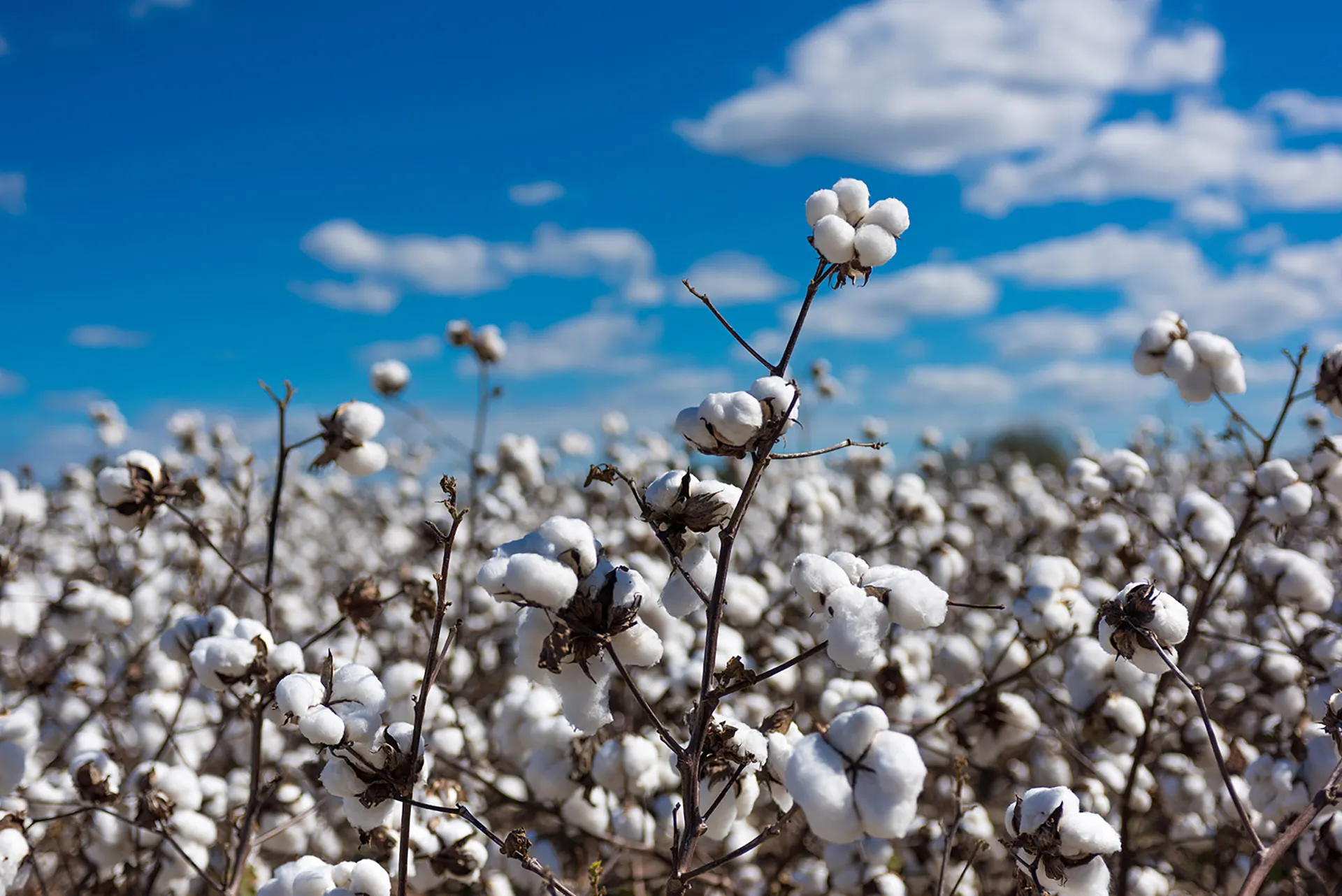
The blackland soil that runs south and east of the city proved well suited to the crop, and the railroads that crossed near the Trinity gave growers somewhere to send it. Cotton arrived in wagons, then in freight cars. It was weighed, classed, pressed into bales, financed, insured, and sent onward to mills in New England and across the Atlantic. None of this required Dallas to grow a single boll. The city's business was the handling: the grading of fibre, the extension of credit against it, and the machinery that moved it. That is a merchant's business, and it made Dallas a merchant's town.
A Trade Built on Judgement
Cotton is not uniform. Two bales from adjoining fields can differ in staple length, in strength, in colour and cleanliness. Those differences decide what the fibre can become, whether coarse duck or fine shirting. Before instruments settled such questions, they were settled by men who pulled a handful from the bale, drew it between their fingers, and named a grade. Their judgement carried money with it. A classer's word set a price, and a buyer's willingness to accept that word rested on reputation accumulated over years.
This is worth dwelling on, because it explains something about the character of commerce here. A trade in graded goods runs on trust and on the standing of the person doing the grading. Contracts were made across a table, often on a handshake, and the penalty for misrepresentation was not litigation so much as exclusion. The men who prospered were the ones whose assessment of a fibre could be relied upon when they were not in the room.
A trade in graded goods runs on trust. The men who prospered were the ones whose assessment could be relied upon when they were not in the room.
The infrastructure followed the habit. Compresses and warehouses, banks willing to lend against stored bales, insurers, brokers, freight agents, and the clerical apparatus that kept the whole thing legible. By the early twentieth century Dallas was a regional financial centre in large part because cotton had required one. The wholesale houses that later made the city a buying destination for the whole southwest were an extension of the same logic: goods arrive, are assessed, and are sent on to someone who needs them.
What the Trade Left Behind
Oil, insurance, aviation, and technology each took their turn as the city's headline industry, and cotton receded from the centre of the story. Mechanisation moved the crop west toward the high plains and irrigation. Synthetic fibres took a share of the mills. The classing rooms emptied of men and filled with instruments. What survived was not the volume but the disposition: a commercial culture comfortable with intermediation, attentive to grade and provenance, and unembarrassed about the visible signs of standing.
That last part matters more than it may sound. In cities built on manufacturing, dress often followed the factory floor. In cities built on trading, dress is part of the instrument. A merchant is judged before he speaks, and he knows it. Dallas has never been a place that apologises for looking prosperous, and the reason is older than the boom years people usually credit for it.
Choosing Cloth Now
A man commissioning a garment today performs, in miniature, the same act that built the city. He is presented with cloth and asked to judge it. Not by brand, not by price alone, but by the qualities that determine what it will do over years of wear.
- Weight, which governs how a cloth hangs and how long it holds a line.
- Weave, which decides whether a jacket reads as formal, working, or somewhere between.
- Fibre and staple, which determine handle, resilience, and how the garment ages.
- Finish, which can flatter a cloth in the bolt and disappoint it in the wardrobe.
- Season, which is a question about Texas heat far more than about a mill's catalogue.
Most of these are decided by hand and eye, in a room, with the cloth open in front of you. A bunch of swatches under electric light tells you less than a length held against a window. Drape it over the forearm; see whether it collapses or falls. Crush a corner and watch how it recovers. These are the same tests, in reduced form, that were once performed on a handful of raw fibre pulled from a bale on a Dallas platform.
The difference is the horizon. The cotton man's interest ended when the bale shipped. Yours begins there. A cloth chosen well will be worn several hundred times, in a climate that punishes the wrong choice, and it will be seen by people forming quiet judgements they will never articulate. That is not vanity. It is the same calculation that ran through every transaction on which this city was founded: the quality of the material, honestly assessed, is the thing that carries.
Dallas grew because it learned to read cloth. It seems reasonable that the men who live here should keep the habit.
Fourth Atlantic